Muddy Paws Welcome: The Ultimate Guide to Dog Walking in the Quantocks (And Where to Dry Off)
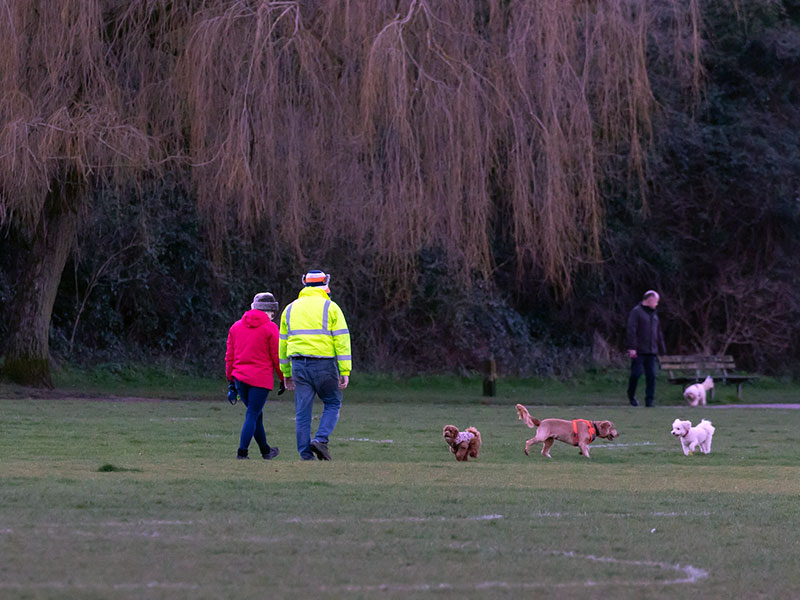
There is a timeless rhythm to a weekend in Somerset: the lacing of boots, the eager jingle of a dog collar, the fresh bite of hill air, and finally, the warmth of a crackling fire with a pint in hand.
For those of us lucky enough to live or work in the Quantock Hills, this isn't just a routine; it’s a lifestyle. As England’s very first Area of Outstanding Outstanding Natural Beauty (AONB), designated way back in 1956, this landscape offers a unique density of variety. Within just a few miles, you can move from the prehistoric rocky shoreline of the Bristol Channel to deep, silent pine forests, and up onto heathland ridges that feel like the roof of the world.
But let’s be honest: a walk is only as good as the reward at the end of it.
At The Windmill Inn, we believe that the best walks end with good food and a warm welcome for two-legged and four-legged visitors alike. Whether you are visiting Somerset for the first time or are a local looking for a new route, we have curated three distinct "Boots & Paws" adventures. These routes showcase the very best of our area, and they all pair perfectly with a post-walk roast or a cold cider.
Here is your 2025 guide to exploring the Quantocks with your dog.
1. The Coastal Time Travel: Kilve Beach & The cliffs
Best for: Families, fossil hunters, and dogs who love a splash. Terrain: Grassy cliff paths and rocky shoreline. Difficulty: Low to Moderate.
If you head to the northern edge of the Quantocks, the rolling green hills come to a sudden, dramatic halt as they crash into the Bristol Channel. This is Kilve, and it offers one of the most unique walking landscapes in the UK.
The Route
Park at the Kilve Beach car park (remember to bring coins, though many machines are now card-friendly). From here, you have two choices. You can head straight down onto the beach, or take the South West Coast Path east towards Lilstock.
We recommend starting on the cliff path. The views here are expansive, stretching right across the grey-blue water to the coast of Wales. On a clear day, you can spot the islands of Steep Holm and Flat Holm resting on the horizon. The path is well-maintained, but do keep dogs on a lead near the edge—the cliffs are made of layers of limestone and shale and can be unstable.
After a mile or so, loop back down onto the shoreline for the return journey. This is where the magic happens.
Why it’s Special
Kilve is famous for its geology. The shoreline isn't made of golden sand, but of incredible, geometric rock formations. These are the "blue lias" formations, dating back to the Jurassic period. As you walk over the rocky plates, look down. It is almost impossible not to spot ammonites—spiral-shaped fossils—embedded right into the floor beneath your boots.
A Note for the Dog: The rock pools here are legendary. While your dog investigates the scents of seaweed and crab, kids (and adults) can hunt for fossils. Just remember: Kilve is a Site of Special Scientific Interest (SSSI). You can look and photograph, but you must not hammer the rocks or remove fossils from the bedrock. Loose fossils found on the beach are generally fair game, but leaving them for the next walker is always a nice touch.
The "Pub Readiness" Factor
This walk can be muddy in winter and dusty in summer, but the main debris you’ll bring back is sand and shale. It’s a breezy, cobweb-clearing walk that builds a fierce appetite for fish and chips or a scampi basket back at The Windmill Inn.
2. The Roof of Somerset: Wills Neck & The Drove Road
Best for: panoramic views, energetic dogs, and fitness enthusiasts. Terrain: Steep ascents, heathland tracks, and bracken. Difficulty: Moderate to Hard.
If you want to feel the burn in your calves and see Somerset from a bird's-eye view, you need to head for the high ground. Wills Neck is the highest point in the Quantock Hills, standing at 1,261 feet (384 meters).
The Route
A popular starting point is the car park at Triscombe Stone. From here, the path is distinct and rises steadily through the heather and gorse. As you climb, the trees fall away, replaced by the hardy heathland shrubbery that gives the Quantocks their signature purple hue in late summer.
The goal is the Trig Point at the summit. Once you reach it, stop and spin 360 degrees. To the west, you have the rugged expanse of Exmoor National Park; to the south, the Blackdown Hills; and to the east, on a crisp day, you can clearly see the iconic silhouette of Glastonbury Tor rising from the Somerset Levels.
The Wildlife Encounter
This area is prime territory for the famous Quantock Ponies. These hardy animals roam freely across the heathland. They are beautiful to photograph and generally very calm, but they are wild animals.
-
Dog Etiquette: If you see ponies, put your dog on a lead immediately. Even the best-behaved dog can be tempted to chase, or conversely, a protective mare might spook if a dog gets too close. Keep a respectful distance, and you’ll enjoy a majestic sight of them grazing against the skyline.
The Descent
You can extend this walk by following the "Drove Road." This ancient trackway has been used for literally thousands of years by traders and farmers moving livestock across the ridges. Walking here feels like walking through history. The ground is firm and stony, making it a good option even after heavy rain when the valley bottoms are boggy.
Returning to the car, you’ll likely be windblown and rosy-cheeked. This is the kind of walk that earns you a dessert. When you get back to The Windmill Inn, we recommend asking for a table near the fire. There is nothing quite like the feeling of "good tired" after conquering the highest peak in the county.
3. The Deep Forest: Ramscombe & Great Wood
Best for: Hot summer days (shade), rainy days (tree cover), and shorter legs. Terrain: Wide forestry tracks, pine needles, and streams. Difficulty: Easy.
Sometimes, you don’t want the exposure of the high ridges or the wind of the coast. You want the quiet, cathedral-like atmosphere of a deep forest. Great Wood, and the valley of Ramscombe, is the perfect escape.
The Route
Park at the Ramscombe picnic area (accessed via Over Stowey). You are immediately enveloped by towering Douglas Firs and ancient oaks. The Forestry Commission manages this area beautifully, meaning the main tracks are wide, level, and accessible.
This is a sensory walk. The air here smells of pine resin and damp earth. The sound of the wind is replaced by the trickling of the stream that runs through the bottom of the combe. For dogs, this is nirvana—an endless buffet of scents from deer, squirrels, and badgers.
The "Red" Encounter
Keep your eyes peeled. Great Wood is one of the best places in Somerset to spot Red Deer, the UK's largest land mammal. They are surprisingly stealthy for their size. If you walk quietly in the early morning or late evening, you might see a stag stepping silently between the tree trunks.
During the autumn (October), you might hear the "rut"—the deep, guttural roaring of stags competing for females. It is an eerie, prehistoric sound that echoes through the valley.
Why We Love It
This walk is versatile. In the height of summer, the canopy provides cool shade when the open hills are too hot for dogs. In the pouring rain, the trees act as a giant umbrella, keeping you relatively dry.
Because the paths are gravelled, this is the "cleanest" of the three walks. If you’re heading to The Windmill Inn for a smarter lunch or a special occasion and don’t want to be covered in mud, this is your best bet.
The Countryside Code: A Quick Refresher for 2025
Before you lace up, a quick reminder about keeping the Quantocks beautiful for everyone. The hills are a working landscape, home to farmers and wildlife.
-
Livestock Aware: The Quantocks have free-roaming sheep and ponies. If you are unsure, keep the lead on. It is a criminal offense for a dog to worry livestock, and farmers have the right to protect their animals. We sell some fantastic local treats at the bar—save the running for the garden or enclosed fields!
-
Tick Check: Like all heathland and woodland in the UK, ticks are present, especially in the bracken. After your walk, give your dog (and yourself) a quick check over.
-
Leave No Trace: It goes without saying, but please bag it and bin it. If you can't find a bin on the hill, bring it back down. We have bins at the pub you are welcome to use if you’re stopping by.
The "Finish Line" at The Windmill Inn
You’ve climbed the hill, walked the coast, or explored the forest. The dog is tired, the kids are hungry, and you are dreaming of a pint.
At The Windmill Inn, we pride ourselves on being the ultimate "Finish Line." We don’t just tolerate dogs; we welcome them. We know that a proper Somerset pub isn't complete without a few sleeping dogs under the tables.
What you can expect when you walk through our doors:
-
The Hydration Station: We always have fresh water bowls available in the beer garden and the bar area.
-
Treats on the Bar: Ask our staff for a biscuit for your four-legged hiking partner.
-
Muddy Boots Welcome: We have hard floors in our bar area specifically so walkers don’t have to worry. We just ask that you give your boots a good stomp outside!
-
The Human Fuel: Our menu focuses on locally sourced, hearty ingredients. Whether it’s a slow-cooked pie, a fresh ploughman's with Somerset cheddar, or a lighter seasonal salad, we have the fuel you need to recover.
A Note on Booking
The Quantocks are becoming a popular destination for visitors from Bristol, London, and beyond. Weekends, especially during walking season (Spring through Autumn), can get busy.
If you are planning a big group hike or just want to guarantee a spot by the fire after your Wills Neck climb, we highly recommend booking a table in advance.
Ready to explore? We’d love to see your photos from the trail! Tag us on Instagram at @[Insert Handle] or use the hashtag #QuantockWalks.
See you on the hill (and then at the bar)!